Queue Management System in Saudi Arabia: 2026 Buyer’s Guide
A modern queue management system in saudi arabia has become essential infrastructure, not a nice-to-have. As banks, hospitals, and government service centres across Riyadh, Jeddah, and Dammam race to meet Vision 2030 service standards, the humble waiting line has turned into a measurable customer-experience battleground. This guide explains how these systems work in 2026, what to look for, and how to calculate real return on investment before you sign a contract.
Long queues cost money. Every abandoned ticket is a lost sale, a frustrated citizen, or a patient who walks out. Smart queuing fixes that quietly in the background, and it pairs neatly with the identity and telecom hardware most organisations already run.
Why a Queue Management System in Saudi Arabia Matters in 2026
The Kingdom’s push toward digital government has raised expectations fast. Citizens who book a doctor via an app will not tolerate an hour standing under a paper number. A queue management system converts that chaos into a predictable, data-rich flow.
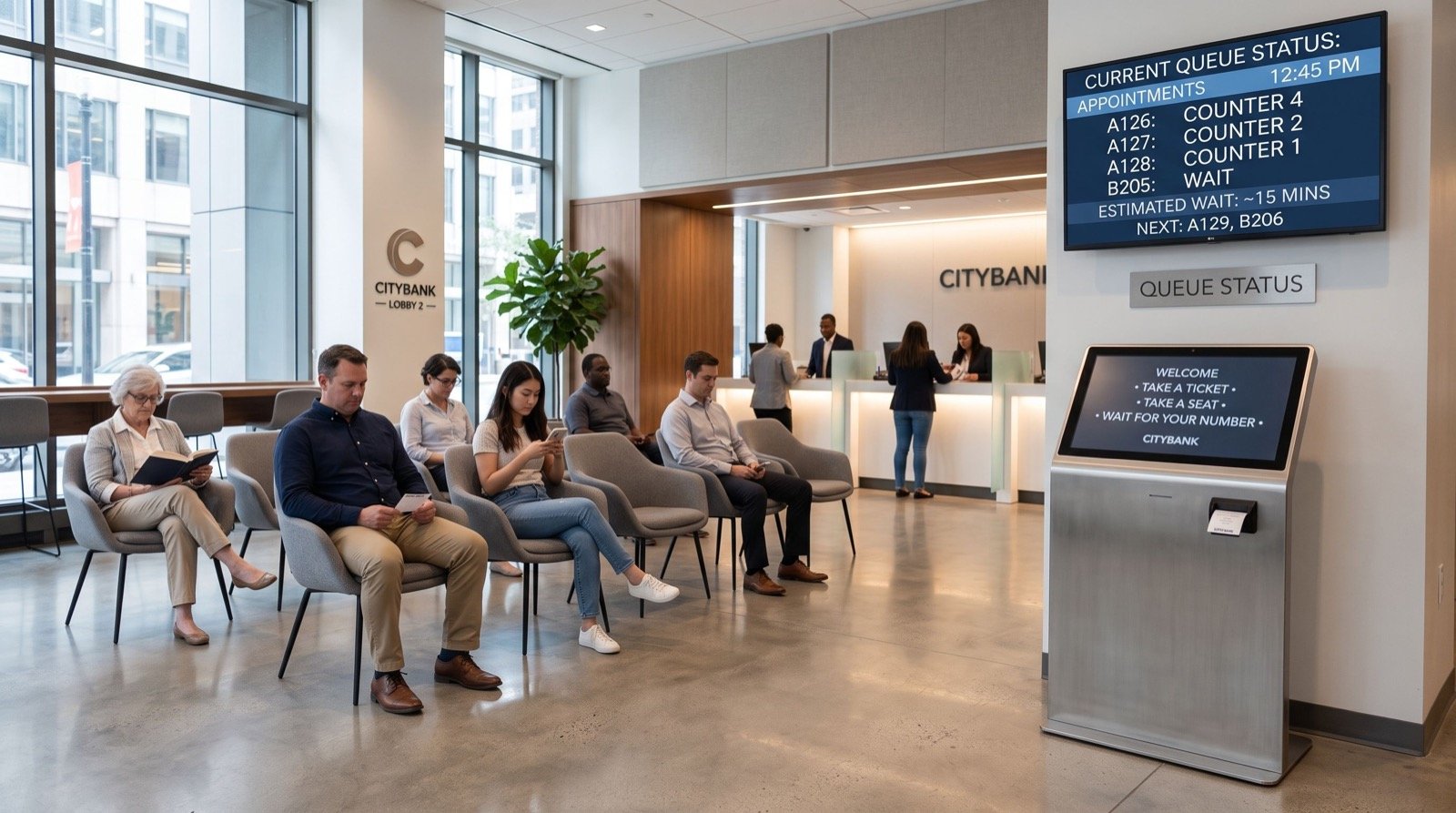
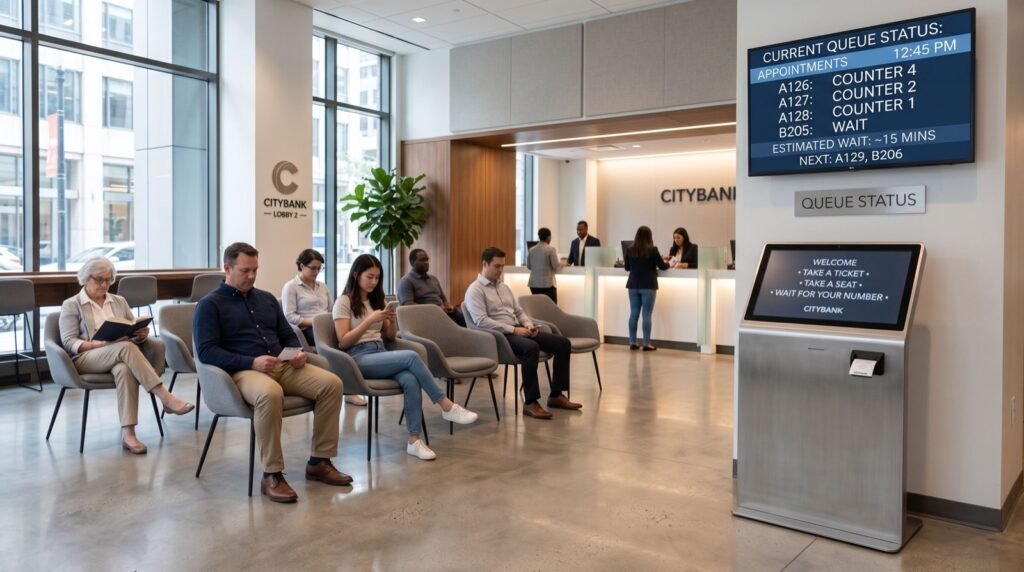
At its core, the system issues a ticket, routes the visitor to the right counter, and tells staff who is next. Behind the scenes it logs every second of wait and service time. That data becomes the foundation for staffing decisions, SLA reporting, and branch benchmarking.
Arabic and English bilingual interfaces are non-negotiable here. So is support for prayer-time pauses, Hijri calendar scheduling, and integration with national identity services. A platform built abroad without these features will frustrate both staff and visitors.
Which Sectors Benefit Most?
- Banking and finance — segment VIP clients, route complex requests to specialists, and keep tellers balanced.
- Healthcare — triage patients, manage pharmacy pickups, and reduce overcrowded waiting rooms.
- Government service centres — handle high walk-in volume for licensing, visas, and municipal services.
- Telecom retail — move SIM activations, device repairs, and billing queries into separate streams.
Core Components of a Queue Management Platform
Buyers often focus only on the ticket kiosk. In reality a complete solution blends hardware, software, and the network that ties them together. Treating it as a telecom-grade deployment prevents nasty surprises later.
The ticketing kiosk or mobile check-in starts the journey. Digital signage and audio calling direct visitors. A staff console lets agents call, recall, transfer, and park tickets. Finally, an analytics dashboard turns raw events into insight for managers.
Identity verification increasingly sits at the front door. Pairing a kiosk with a Biometric Finger Print Scanner lets a returning customer check in with a touch, pulling up their history instantly and skipping manual data entry.
Hardware and Network Considerations
Signage screens, kiosks, and counters all talk over your LAN or a dedicated VLAN. Plan for Power over Ethernet, surge protection, and failover connectivity so a single switch outage never freezes an entire branch. For multi-site rollouts, a centralised cloud tenant with local caching keeps branches running even during a WAN hiccup.
| Deployment Model | Best For | Typical Lead Time | Ongoing Cost |
|---|---|---|---|
| On-premise server | Banks, strict data residency | 4–6 weeks | Higher (maintenance) |
| Cloud / SaaS | Multi-branch retail, clinics | 1–2 weeks | Predictable monthly |
| Hybrid | Government with on-site backup | 5–8 weeks | Moderate |
How to Choose the Right Vendor
Features look similar on a brochure, so dig deeper. Ask for a live reference site in the Kingdom and visit it during peak hours. Watch how staff actually use the console under pressure, not in a quiet demo.
Insist on local support with Arabic-speaking engineers and a documented response SLA. Imported platforms with support eight time zones away leave branches stranded. Working with dependable specialists who understand regional compliance saves months of rework.
- Confirm bilingual Arabic/English UI across kiosk, signage, and reports.
- Check integration with your CRM, core banking, or hospital information system.
- Verify data residency aligns with Saudi regulations and the national data authority guidelines.
- Test the analytics export — can you pull wait-time trends into your BI tool?
- Review the warranty, spare-parts stock, and on-site maintenance terms.
Measuring ROI and Service Performance
The fastest way to justify a purchase is a baseline study. Record average wait time, service time, and abandonment rate for two weeks before go-live, then compare after ninety days. Most branches see wait times drop 30–50% simply through smarter routing.
Original tip: add a short SMS satisfaction survey triggered the moment a ticket closes. Linking that score to the exact counter and agent reveals coaching opportunities that raw speed metrics hide — a trick most Saudi deployments overlook.
Appointment pre-booking is the other quiet win. Letting citizens reserve a slot online flattens the morning peak and shrinks the lobby crowd, which matters hugely for healthcare infection control.
Trends Shaping Queue Management in 2026
The technology is moving quickly, and buyers who plan for the next three years avoid expensive rip-and-replace cycles. Three shifts stand out this year across the Kingdom.
First, mobile-first check-in is becoming the default. Citizens increasingly expect to join a virtual queue from their phone before leaving home, then receive a push notification when their turn approaches. Physical kiosks remain as a fallback, but the smartphone is now the primary ticket.
Second, artificial intelligence is entering wait-time prediction. Instead of a crude average, modern platforms forecast each visitor’s likely wait using live staffing and historical patterns. Accurate estimates reduce anxiety and visibly cut walk-outs.
Third, unified identity is tying everything together. When a fingerprint or national ID check-in links to the queue, the CRM, and the service record, the entire visit becomes seamless. Branches that integrate these layers now will lead on customer experience as Vision 2030 service targets tighten.
Accessibility is the quiet fourth trend. Voice prompts, high-contrast signage, and priority routing for elderly or disabled visitors are shifting from optional extras to procurement requirements, especially in public-sector tenders.
Frequently Asked Questions
What does a queue management system in Saudi Arabia typically cost?
Pricing depends on branches, counters, and screens. A single-site cloud setup often starts modestly per month, while a multi-branch bank deployment with biometric check-in and on-premise servers scales higher. Request a quote based on your peak daily ticket volume rather than headline seat counts.
Can it integrate with biometric and telecom hardware we already own?
Yes. Mature platforms expose REST APIs and standard drivers, so fingerprint scanners, ID readers, and VoIP calling systems connect without custom firmware. Always confirm the exact device models during procurement.
How long does deployment take?
A cloud single-site rollout can go live in one to two weeks. On-premise and hybrid government projects with data-residency reviews typically need four to eight weeks, including staff training and acceptance testing.
Is it suitable for small clinics or retail outlets?
Absolutely. Entry-level cloud tiers suit a single counter with a tablet kiosk, then grow with you. You pay for capacity you use instead of over-buying hardware on day one.
Conclusion
In 2026 a well-chosen queue management system in saudi arabia pays for itself through shorter waits, happier visitors, and sharper staffing decisions. Treat it as networked, data-driven infrastructure, insist on local support, and measure results from day one. Ready to modernise your branches? Talk to an experienced team today and request a tailored demo before your next peak season.